The annual two day St. Antony’s festival on the island of Kachchativu, that brings together pilgrims, mainly from the fisher communities of both India and Sri Lanka, drew to a close last Sunday.
Jaffna’s Vicar General Justin Gnanapragasam conducted holy mass at St Antony’s church.
“We believe that our saint listens to our prayers and conveys them to God. That’s why we came here,’’ said Jesurasa a fisherman from Rameshwaram who was attending the festival with his family.The feast attracted not only pilgrims but also business vendors from both countries, although Indian authorities had warned Indian fisherfolk to refrain from engaging in trade this year. Vendors were seen selling items varying from fancy goods to fabrics and trading in both local and Indian currency in makeshift stalls that lined the path to the Church.
Some pilgrims had brought cooked food while others were seen preparing their meals.
Sri Lanka Navy Commander Vice Admiral Jayantha Colombage commenting on the occasion said that the festival was a bridge of friendship between the people of India and Sri Lanka. “They worship together without any differences. This is a good opportunity to build on mutual trust and understanding,” he said.
“The Sri Lanka Navy has been hosting this festival since the end of the war and this year we worked together with the Army to provide drinking water, electricity and sanitary facilities to the devotees,” the Navy Commander added.
Father James, a parish priest who represented the Indian delegation said 125 priests and 75 nuns participated in the feast.
Source:http://www.sundaytimes.lk/140323/news/kachchativu-festival-a-good-opportunity-to-build-harmony-says-navy-commander-90173.html
Saturday, March 22, 2014
Saturday, March 15, 2014
Annual Katchatheevu feast begins today
The Annual Katchatheevu feast will begin today (Saturday) with the participation of a large number of devotees from India and Sri Lanka. The shores of Katchatheevu islet on the Palk Strait will be opened for Indian Fishermen enabling them to attend the three-day St Antony’s Church festival.
The Sri Lanka Navy has made provisions for the required facilities and security for devotees attending the event. Accommodation, sanitary facilities and drinking water will also be provided by the Sri Lanka Navy. Life saving and medical teams are also expected to be deployed of the benefit for the devotees arriving on the island.
Last year feast saw 2,814 devotees arrived from India, who came in 100 boats, and 2,381 Sri Lankan devotees in 208 boats to attend the St Antony’s Church festivities. St Antony’s Catholic Shrine on the island was built by an Indian Catholic called Srinivasa Padaiyachi and named after St Antony, patron-saint of seafarers, to whom the feast is dedicated
- See more at: http://www.nation.lk/edition/news-online/item/27027-annual-katchatheevu-feast-begins-today-navy-provides-necessary-facilities-to-pilgrims.html#sthash.z9xw093u.dpufSaturday, February 15, 2014
Train service to Jaffna on Sri Lanka's northern track to commence in April
People in the south will once again be able to travel to Jaffna by train, the General Manager of Sri Lanka Railways B.A.P Ariyaratne has said.
Reconstruction of the Northern Railway Line to Kankasanthurai in Jaffna peninsula will be completed by April this year and the service will resume by the Sinhala and Tamil New Year, the official told the state-run radio.
The 146-km long track with a design speed of 120km/h was constructed in two phases - from Omanthai to Pallai and Pallai to Kankasanthurai.
The 63-km long first segment of the reconstructed railway track from Omanthai to Kilinochchi was opened for train traffic in September 2013.
The train service on the next segment of 40 km from Kilinochchi to Pallai is scheduled to commence from the first week of February allowing the train service to operate from Colombo to Pallai.
Sri Lanka Railways also completed the reconstruction of first 43 km section of the Thalaimannar Line from Medawchchiya to Madhu Road. The next 65 km section from Madhu to Thalaimannar is also scheduled to be completed soon and the train service will commence before April, the official said.
Ariyaratne said the northern track will be used for the transportation of fuel and the Railway Department hopes to import several more power sets and compartments.
The Indian Railway Construction Company Limited (IRCON) is carrying out the construction work of both projects which is being financed under a US$ 425 million credit facility from India.
Sri Lanka's Northern Line from Vavuniya to Kankasanthurai in the northernmost tip of the island was completely destroyed by the Tamil Tiger terrorists during the three-decade long war. The rebels uprooted the rail tracks to build reinforced underground bunkers.
Source:http://www.colombopage.com/archive_14A/Jan11_1389424541CH.php
We need to move forward and rebuild the North - Jaffna University VC
Chief Minister of the Northern Provincial Council (NPC) C.V. Wineswaran had to take a dose of his own medicine at the National conference on Post-terrorism Socio-Economic Development of the Northern and the Eastern Provinces organised by the University Grants Commission under the patronage of its Chairperson Prof. Kshanika Hiriburegama at Taj Samudra Hotel, Colombo on Thursday.
Vice Chancellors of the University of Jaffna and the Eastern University countered baseless allegations made by the NPC Chief Minister who was the chief guest at the conference. Wigneswaran said the powers vested with the NPC was inadequate, the Northern province has not been developed after the end of terrorism, inadequate living standards of the people and the presence of the Security Forces. Vice Chancellor, Jaffna University Prof Vasanthy Arasaratnam and the Vice Chancellor of the Eastern University Dr. K. Kobindarajah shot down wild allegations made by Chief Minister Wigneswaran with statistical and research data.
The findings of the two Vice Chancellors is a setback for Wingeswaran as the two eminent academics have been with the people in the North and the East and have first-hand experience on the situation whereas Wigneswaran, living in Colombo 7, is a political parachute.
Jaffna University Vice Chancellor, Prof. Arasaratnam spoke at length about her personal experience and said that when infrastructure development is taking place, they should move forward. We as academics will give our fullest collaboration in livelihood development of the Northern people,” she said adding that she and the people in the North had suffered enough due to LTTE terrorism. We need to move forward, try to forget the past and rebuild the North, like I have rebuilt my home that was destroyed due to terrorism,she said.
Eastern University Vice Chancellor Dr. Kobindarajah suggested forming a committee of academics to work with President Mahinda Rajapaksa with the support of the Tamil National Alliance (TNA). All parties concerned should address the real cause and genuinely work hard.
I firmly believe that if you work with an open heart we could definitely sort out whatever the problems we have. We as the academics are ready to play a key role to promote ethnic harmony and reconciliation,he said.
Source:http://www.sundayobserver.lk/2014/02/16/new05.asp
Saturday, April 27, 2013
Northern Line gets ready for Yal Devi
If there was a symbol to represent the strong bonds of friendship between the Southern people and the Northern people of Sri Lanka, it was the Yal Devi train. Therefore, it is the Yal Devi train that gets affected first if there are strained relations between the North and the South and the incidents during the three-decades-long terrorism proved this fact beyond any doubt.
The railway line from Medawachchi to Kankesanthurai in the northern most part of the country was constructed and commissioned for traffic on September 10, 1905 and the rail line was destroyed by the LTTE several times and the train service completely ceased operations after June 13, 1990.
"The project to construct the rail track from Omanthai to Pallai commenced on March 24, 2011 and it has to be completed by September 24, 2013.
"The construction of the rail track and fixing of bridges and culverts will also be included under this project at a cost of US$ 185 million", he said.
The Indian Railway Construction Company Limited (IRCON) has undertaken the construction work as the key contractor of the project.
"This section of the track is having crossing stations and sub-stations at Puliyankulam, Mankulam, Murikkandi, Kilinochchi, Paranthan, Elephant Pass (Halt) and Pallai. The existing railway stations will be redeveloped to facilitate the project", Fernando said.
Although the former track was constructed with a design speed of 80 kilometres per hour, the new track will have a design speed of 120 kilometres per hour. "That means the trains can run at a speed of 100 kilometres per hour", he said.
Project Director for the Northern Rail Line from Pallai to Kankesanthurai section S.G. Premkumar said the construction work of the second phase of the project which has also been undertaken by the Indian Railway Construction Company Limited was also commenced on June 14, 2012.
"We have cleaned the surface of the track and a detailed survey on all the bridges, culverts, level crossings has been done. The rails required have already been brought. Now the contractor is going ahead with the construction work at different stages at different places", he said.
There are seven crossing stations between Pallai and Kankesanthurai and the stations are located in Kodikamam, Chavakachcheri, Navatkuli, Jaffna, Kondavil and Chunnakam. The 11 sub-stations are at Elthumadduval, Mirusavil, Meesalai, Sangasthanai, Kachchanthoppu, Punhankulam, Kokuvil, Lunuvil, Mallakam and Thelippallai. "This section of the project costs US$ 149 million. According to the schedule, the project has to be completed by June 13, 2014 and the contractor is working on that", he said. "The main challenge we faced in this project is the supply of gravel. Since the project comes within the Jaffna peninsula where gravel is not available, the gravel needed for the project has to be brought from the Kilinochchi and Mullaitivu districts.
"Therefore, we have to pay a good amount as transport cost for the gravel", he said.
"The other challenge we face is the number of level crossings. Mainly 111 level crossings are there within 65 kilometres and that is not healthy for the speed of the train. However, we have found that one third of those level crossings can be eliminated because they are connecting each other. Therefore, we have presented this case to the Government Agent in Jaffna. Now things are going on little by little and again we will be meeting the Divisional Secretaries with the details of the real roads and connecting roads and to explain to them that there are ways of reducing the number of level crossings", he said.
Now, only a temple in the university premises is left and I think that issue will also be settled soon without much problem", he said. Project Director, Medawachchiya Madhu and Madhu to Talaimannar Railway Line Development N.P. Lalith N. Peiris said that they are hoping to complete the track from Medawachchiya to Madhu Road by the end of May as they have already completed 96 percent of the work.
"A trial run was successfully conducted on April 23", he said. "We started construction work of this section of the rail track on March 23, 2011. The cost of the project from Medawachchiya to Madhu is US$ 81.31 million", he said.
"Now the track is completed and the building work is also about 80 percent completed. By the end of May, the entire section from Medawachchiya to Madhu will be completed if there are no other problems", he said. He said about 50 percent of the construction of the rail track between Madhu Road to Talaimannar is also completed with the aim of completing the project by September."Most of the rails and sleepers have been imported from India to facilitate the project. These things have been designed under Indian railway standards and they are very similar to Sri Lankan standards", he said.
The US$ 149.74 million project of laying the rail track from Madhu to Talaimannar include the construction of the Talaimannar pier. "Since the project also includes the pier the contractors may not be able to complete the entire project within the given time frame", he said.
There are three major bridges to facilitate the project and there will be a 100 foot three span bridge, and a 100 foot two span bridge. The Talaimannar pier is 960 feet in length. Five crossing stations and three sub-stations will be there between Madhu Road and Talaimannar.
The five main stations will be Murunkan, Mannar, Pesalai, Talaimannar and the Taliamannar Pier. The other three halts are located at Manthottam, Thiruketheeswaran and Thoddaweli. "The rail track has a design speed of 120 kilometres per hour, but normally a train can run at a speed of 100 kilometres per hour. That means within one and a half hours you can travel from Medawachchiya to Talaimannar", he said.
The completion of the Medawachchiya, Talaimannar rail track along with the Talaimannar pier will pave the way to create the shortest link between India and Sri Lanka with the starting of the ferry service between Talaimannar and Rameswaran."This is very good for Sri Lanka and India, and it will be a good opportunity for tourism as well. The Northern people will find that it is the shortest and the cheapest way of travelling to India", he said.
Source:http://www.sundayobserver.lk/2013/04/28/fea05.asp
Work at the site
In the same way, restoration of that broken down train service between the North and the South is one of the first things, the people in the North or the South, would embark on once the differences between the North and the South are resolved.
Therefore, re-establishing the Northern rail track and restarting the Yal Devi train service is a landmark in the communal harmony of the country in the process of reconciling the communities after ending terrorism.
The Railway Department under the Ministry of Transport and with huge financial assistance from the Indian government under the Indian Line of Credit has embarked on this massive project of restoring the Northern rail tracks to restart the train services connecting the Northern town again to the South through rail links.
People are eagerly waiting to see the train services from the South to the Northern town of Kankesanthurai and to Talaimannar start for the Southern people to visit the North and for the Northern people to visit the South in a relaxed journey while improving their cultural ties in a mutual way.
The Railway officials made the first step towards restoring the train services in the newly re-laid tracks on the Medawachchiya-Talaimananar line, after successfully completing the trial run from Medawachchiya to Madhu Road on April 23 as 96 percent of the track upto Madhu has been completed with the hope of starting the train services upto Madhu Road by the end of next month. Therefore, people would be able to see the recommencement of the train services to the Northern towns within this year.
Commissioned for traffic
According to Chief Engineer Way and Works and Project Director Northern Rail line from Omanthai to Pallai Priya Fernando, nearly 80 percent of the construction work of the Omanthai to Pallai section has also been completed as of now with the focus on completing the first phase of the project upto Kilinochchi by September this year.
Completed section of the rail track
"The construction of the rail track and fixing of bridges and culverts will also be included under this project at a cost of US$ 185 million", he said.
The Indian Railway Construction Company Limited (IRCON) has undertaken the construction work as the key contractor of the project.
"This section of the track is having crossing stations and sub-stations at Puliyankulam, Mankulam, Murikkandi, Kilinochchi, Paranthan, Elephant Pass (Halt) and Pallai. The existing railway stations will be redeveloped to facilitate the project", Fernando said.
Although the former track was constructed with a design speed of 80 kilometres per hour, the new track will have a design speed of 120 kilometres per hour. "That means the trains can run at a speed of 100 kilometres per hour", he said.
Straightening bends
When constructing the new track, steps have been taken to straighten the bends in the earlier track, making it possible to increase the speed of the train. "We can say 90 percent of the earth formation has been done, seven kilometres of the track and 1.25 kilometres of the rail lines have already been laid. Through that process we have completed the most difficult part of the project to facilitate the laying of the track", he said. "We are focusing attention on completing the track upto Kilinochchi at the first phase and to complete the second phase from Kilinochchi to Pallai later", he said.Project Director for the Northern Rail Line from Pallai to Kankesanthurai section S.G. Premkumar said the construction work of the second phase of the project which has also been undertaken by the Indian Railway Construction Company Limited was also commenced on June 14, 2012.
"We have cleaned the surface of the track and a detailed survey on all the bridges, culverts, level crossings has been done. The rails required have already been brought. Now the contractor is going ahead with the construction work at different stages at different places", he said.
The trial run from Medawachchiya to Madhu Road on April 23
"Therefore, we have to pay a good amount as transport cost for the gravel", he said.
"The other challenge we face is the number of level crossings. Mainly 111 level crossings are there within 65 kilometres and that is not healthy for the speed of the train. However, we have found that one third of those level crossings can be eliminated because they are connecting each other. Therefore, we have presented this case to the Government Agent in Jaffna. Now things are going on little by little and again we will be meeting the Divisional Secretaries with the details of the real roads and connecting roads and to explain to them that there are ways of reducing the number of level crossings", he said.
Newly developed stations
According to Premkumar, only a few of the earlier stations are available at present and they are trying to make use of the existing ones as a part of the newly developed stations. "There were some unauthorised settlers on the rail track, but they were shifted from the track. I must say they shifted without any protest.Now, only a temple in the university premises is left and I think that issue will also be settled soon without much problem", he said. Project Director, Medawachchiya Madhu and Madhu to Talaimannar Railway Line Development N.P. Lalith N. Peiris said that they are hoping to complete the track from Medawachchiya to Madhu Road by the end of May as they have already completed 96 percent of the work.
"A trial run was successfully conducted on April 23", he said. "We started construction work of this section of the rail track on March 23, 2011. The cost of the project from Medawachchiya to Madhu is US$ 81.31 million", he said.
The construction site
No sign of tracks
By the time the construction work started, there was no sign of a track and the rails and sleepers had been removed for the construction of bunkers. There are three stations, between the 43 kilometre stretch between Medawachchiya and Madhu Road and they are Nellikulum, Chettikulum and Madhu Road."Now the track is completed and the building work is also about 80 percent completed. By the end of May, the entire section from Medawachchiya to Madhu will be completed if there are no other problems", he said. He said about 50 percent of the construction of the rail track between Madhu Road to Talaimannar is also completed with the aim of completing the project by September."Most of the rails and sleepers have been imported from India to facilitate the project. These things have been designed under Indian railway standards and they are very similar to Sri Lankan standards", he said.
The US$ 149.74 million project of laying the rail track from Madhu to Talaimannar include the construction of the Talaimannar pier. "Since the project also includes the pier the contractors may not be able to complete the entire project within the given time frame", he said.
There are three major bridges to facilitate the project and there will be a 100 foot three span bridge, and a 100 foot two span bridge. The Talaimannar pier is 960 feet in length. Five crossing stations and three sub-stations will be there between Madhu Road and Talaimannar.
The five main stations will be Murunkan, Mannar, Pesalai, Talaimannar and the Taliamannar Pier. The other three halts are located at Manthottam, Thiruketheeswaran and Thoddaweli. "The rail track has a design speed of 120 kilometres per hour, but normally a train can run at a speed of 100 kilometres per hour. That means within one and a half hours you can travel from Medawachchiya to Talaimannar", he said.
The completion of the Medawachchiya, Talaimannar rail track along with the Talaimannar pier will pave the way to create the shortest link between India and Sri Lanka with the starting of the ferry service between Talaimannar and Rameswaran."This is very good for Sri Lanka and India, and it will be a good opportunity for tourism as well. The Northern people will find that it is the shortest and the cheapest way of travelling to India", he said.
Source:http://www.sundayobserver.lk/2013/04/28/fea05.asp
Trial train-run reaches Madhu Road Station
A trial run on the 43-km new railway track between Medawachchiya and Madhu Road was conducted recently. The rail track was reconstructed by Ircon International Limited, a government company under the Ministry of Railways of India. Project Director, Sri Lanka Railway, M.P.L.N Peiris, Team leader, CECB, M P De Silva and General Manager, Ircon International Limited, S L Gupta, undertook the trial run. The trial run commenced from the Medawachchiya station and ended at the newly constructed Madhu Road Station.
“The trial run was successful and comfortable and we are pleased that this phase of the project has been completed,” said Gupta.The reconstructed track is a 43-km long segment of the Northern Railway Line project, comprising 252-km of rail track, which is being executed by Ircon International Limited.
The project is funded by the Government of India, under an Indian line of credit.
“This segment has been completed within schedule,” said Gupta.
The reconstructed railway track has been designed with a speed potential of 120 kmph. Rail joints are minimised using the latest modern welding technology.
Pre-stressed concrete sleepers have been used to lay the tracks, instead of traditional wooden sleepers to ensure durable and stronger tracks, simultaneously helping to preserve the environment.
CMS (Cast Manganese Steel) crossings with standard turnouts, long welded rails with switch expansion joints, panel interlocking and flash butt welding have been incorporated to provide a long-lasting track, with minimal maintenance effort.
“For the execution of the project, local manpower and agencies have been deployed to generate employment and skills development,” said Gupta.
Friday, March 29, 2013
Jaffna Music Festival a resounding success
The Jaffna Music Festival 2013, held at the Jaffna Town Municipal Grounds recently was a resounding success. Organizers say the event was witnessed by a collective audience of over 25,000 people over the two days. Many groups of people from the North, South, East and West travelled to the grounds to witness together the excitement of hosting a wide array of musicians and performers from both all over the country and internationally-who entertained the crowd with their colourful costumes and unusual instruments.
There were numerous family-friendly activities lined up during the daytime programme which included an intimate and informal setting on which artists of Folk, Classical, Contemporary genres could entertain and educate audiences about their various musical genres. The performers were colourful and lively and most engaged the audience by getting off the stages to encourage members of the audience to join in on the singing, dancing and general merriment.
A participant named Thush said, “It felt like we were all part of the show, and the atmosphere was as if we were in a village somewhere in Jaffna – it was exciting but also very relaxed at the same time.”
The children’s stage was a huge hit where children from all over the country were inspired and entertained through very impressive and polished performances ranging from Folk to Blues, Jazz, Choral and Percussion.
The mornings were lively and colourful with a blend of a variety of languages, songs, music and flair floating in the air. Capturing all those special moments were official JMF photographers, accompanied by the participants of the Youth Social Media Programme conducted by USAID together with the National Youth Services Council.
The night-time main stage performances dazzled everyone – the local artists astounded audiences with multi-faceted acts which featured a unique performance from a female drummer and fire eater. It truly was a festival of diverse cultural interaction. The mix of diverse musical genres representing traditions and styles from across Sri Lanka and the world provided an interesting musical experience. The multiple collaborations between Bangladesh, Norway, India and Sri Lanka in forms of both song and dance were a huge hit with the crowds.
The Jaffna Music Festival 2013 was brought to you by Sewalanka in collaboration with Rikskonsertene (Concerts Norway) and Aru Sri Art Theatre and is funded by the Royal Norwegian Embassy and the United States Agency for International Development (USAID). This time around the festival was conducted in co-partnership with the Sri Lanka Convention Bureau and the Municipal Council of Jaffna.
Source:http://colombogazette.com/2013/03/29/jaffna-music-festival-a-resounding-success/
There were numerous family-friendly activities lined up during the daytime programme which included an intimate and informal setting on which artists of Folk, Classical, Contemporary genres could entertain and educate audiences about their various musical genres. The performers were colourful and lively and most engaged the audience by getting off the stages to encourage members of the audience to join in on the singing, dancing and general merriment.
A participant named Thush said, “It felt like we were all part of the show, and the atmosphere was as if we were in a village somewhere in Jaffna – it was exciting but also very relaxed at the same time.”
The children’s stage was a huge hit where children from all over the country were inspired and entertained through very impressive and polished performances ranging from Folk to Blues, Jazz, Choral and Percussion.
The mornings were lively and colourful with a blend of a variety of languages, songs, music and flair floating in the air. Capturing all those special moments were official JMF photographers, accompanied by the participants of the Youth Social Media Programme conducted by USAID together with the National Youth Services Council.
The night-time main stage performances dazzled everyone – the local artists astounded audiences with multi-faceted acts which featured a unique performance from a female drummer and fire eater. It truly was a festival of diverse cultural interaction. The mix of diverse musical genres representing traditions and styles from across Sri Lanka and the world provided an interesting musical experience. The multiple collaborations between Bangladesh, Norway, India and Sri Lanka in forms of both song and dance were a huge hit with the crowds.
The Jaffna Music Festival 2013 was brought to you by Sewalanka in collaboration with Rikskonsertene (Concerts Norway) and Aru Sri Art Theatre and is funded by the Royal Norwegian Embassy and the United States Agency for International Development (USAID). This time around the festival was conducted in co-partnership with the Sri Lanka Convention Bureau and the Municipal Council of Jaffna.
Source:http://colombogazette.com/2013/03/29/jaffna-music-festival-a-resounding-success/
Saturday, March 23, 2013
Keppapilavu, a model of rural development
Just 200 metres from the village of Keppapilavu lies the historic Nanthikadal lagoon. The villagers from this area were the last batch to come from welfare centres set up for displaced persons in Cheddikulam, Vavuniya so they attracted a lot of attention. Today, this developing village has become a model of rural development, not only to the Maritimepattu DS Division to which it belongs in the Mullaitivu district, but to the entire country.
There are 262 families with 868 members in the village, according to President of the Rural Development Society Rasaiah Parameshwaran. The Grama Niladhari Division to which this village belongs comprises four villages – Sooriyapuram, Keppapilavu, Seeniyamotai and Pelakkudiyirippu. After resettling here, the villagers have formed a Rural Development Society to effectively coordinate the development work.
Resettlement Minister Gunarathne Weerakoon and Deputy Minister Vinayagamurthi Muralidharan at the event
Soldiers of the Army, with funds from the Ministry of Resettlement, are constructing 165 houses in the first phase of the housing project in the village. As of today, 50 completed houses were handed over to the owners. At a special event, the Ministry of Resettlement laid foundation stones for 115 more houses.
Construction work
A completed house Pic: Susantha Wijegunasekera
These houses will be built jointly by the community and the soldiers of the Sri Lanka Army, funded by the Ministry of Resettlement. The Ministry granted Rs. 300,000 for each family to build a house and construction work was carried out by the Sri Lanka Army with community participation. Many houses for the elderly, disabled people and single parent (mother only) families were completely built by the soldiers.Resettlement Minister Gunarathne Weerakoon, Deputy Minister Vinayagamurthi Muralidharan, Ministry Secretary Janaka Sugathadasa, District Secretary Veganayadan, Security Forces Commander (Mullaitivu) Maj. Gen. L.B.R. Mark and several civil administration and military officials were present on the occasion when the foundation stones were laid.
According to Rural Development Society Vice President Pastor Susil Kumar, the Government has allocated land for those families who still live away from the village and the land in front of the model village is cleared for this purpose.
Everyone here lives either by fishing, farming or working for daily wages, said Susil Kumar, explaining how the village works as one unit. “It is through the Rural Development Society that we select families that need to be given priority in receiving welfare assistance,” he explained.
Under the command of the Security Forces Headquarters Mullaitivu, the Army's 592 Brigade is given the responsibility of constructing this village. “Nearly 19 Grama Niladhari Divisions come under the area of responsibility of the 592 Brigade; nearly 20,000 people live in these areas,” said Brigade Commander Brigadier Ranjith Samarasinghe “People of the Keppapilavu village resettled here last September. These are the people who came last from the welfare centres,” Brgd. Samarasinghe said.
For Keppapilavu village, as the initial step, the Army has started the 'Fifty houses in ninety days’ project.
Building houses
The entire project of constructing the village was undertaken by the Army. “As soon as the people came here, the Army constructed temporary shelters for them.
Then, as the community started receiving Government funds, we were able to start building permanent houses for these people. The funds were transferred by the District Secretary through the Divisional Secretary to the people.
Funds from Ministry
The funds were from the Ministry of Resettlement. The material was purchased through the District Secretary and getting them transported to this village was done by us,” he said, detailing the tedious task the soldiers had carried out.
The deeds for the houses being presented to the owners by Security Forces Commander (Mullaitivu) Maj. Gen. L.B.R. Mark
According to the Brigadier, around 100 Army personnel were deployed to construct the houses. “We started the project at the end of November.
During the heavy rains, we could not carry out construction work. That was the only delay, which was two weeks,” he said. The funds for the water supply system for the village came through the Pradeshiya Sabha.
Army personnel have constructed a school through their own efforts and donations from well-wishers.
“There are 70 children studying in this school which has classes up to year five. About one kilometre away there is another school, Vattappalai Vidyalaya, where the older children study. It has classes up to Advanced Level,” he said.
“A well-wisher, contacted through Maj. Gen. Mark, donated 100 bicycles for the children last December,” he said.
“To the families that depend on farming, through the District Secretary, land is given to start cultivation. The Grama Niladhari has the details of the original land extent each person had. So, land of similar size will be given to them from the nearby area called Maligathivu.
“The District Secretary has identified a 100-acre land in that area. These lands are being de-mined,” he said.
Source:http://www.sundayobserver.lk/2013/03/24/fea01.aspReawakening Jaffna
Jaffna which was dead for nearly 35 years is slowly waking up though apparently the ‘promised land’ is some distance away.
To gauge the reawakening and rediscover the ‘lost land’, members of the Sri Lanka Association of Inbound Tour Operators (SLAITO) in a bid to promote Jaffna as another travel destination like Anuradhapura or Polonnaruwa underwent a 3-day extensive tour to Jaffna, last week. A Business Times team also joined the tour.
On the sidelines of the dinner thrown by Tilko Jaffna City Hotel in honour of the visiting SLAITO mission, Mahen Kariyawasan, President, SLAITO told the Business Times that, “We wanted to rediscover ourselves, the actual ground situation, the strengths and potentials of Jaffna, so that we can properly focus Jaffna and add it to our inbound travellers’ itinerary.”
He said that they themselves have to be acquainted by these places of travel interest so that they could appraise the foreigners.
“I am amazed; it is a great place to be visited, though there are little things that have to be sorted out. Hotels are quite good”, he revealed. In Jaffna, he said the scope is vast.
When Mr Kariyawasan was asked to comment on the issue of accommodation, he said that Jetwing has started a major hotel project and already the foundation has been laid and in another two three years’ time there would be several large hotels available in Jaffna.
There were top notch travel magnates like Husain Jayah, Director – Sales, Aitken Spence Hotels, Asgar Mohideen, Chairman, United Holidays and Wasantha Leelananda, President Walkers Tours along with Mr Kariyawasan who heads Andrew the Travel Co (Pvt) Ltd in the delegation.
The SLAITO group visited every place of interest that would attract the foreign traveller like the Jaffna Dutch Fort, Nallur Kovil, Mandri Manai, Nagadeepa Viharaya, Chatty Beach, Point Pedro, Keerimalai, Kurimanduwan Jetty and many other such places that would be likened by the exploring traveler.
The mass expanse of water is everywhere around Jaffna – lagoons, estuaries and the blue seas with yet unexploited beaches enthralled the group and some commented that if properly developed the water sector would become the major draw, which most travelers would love. The visitors were amazed at such magnificent, endless water stretches.
There are several islands like Kachchativu, Mullaitivu, Karativu (‘tivu’ denotes island) but once they are connected by bridges the islands become cities such as ‘Karainagar’. The roads leading to these islands are through long stretches of water on either side. Some of them of are occupied by the Navy and in them the native community has been uprooted. So travellers too cannot visit these Navy-occupied islands.
SLAITO experienced the art of casting nets and the vast variety of birds that were flying in formation. Sasanka Nanayakkara, Director, D Holidays (Pvt) Ltd, a veteran inbound travel agent and a bird lover was dumbfounded to watch the variety of sea birds hauling fish all the way across these waters. He said that with his knowledge of birds, he has identified that some of these birds are seasonal migrants and if this aspect is properly focused, it would also become a major attraction.
The Business Times also accompanied SLAITO in visiting different hotels. Tilko Jaffna City Hotel is one of the best hotels, located on the Kankesanthurai Road. Its Managing Director, Thilak T Thilagaraj, told this newspaper that they are a star class hotel with 42 luxury rooms and modern facilities are in place, in them.
It came up in 2010 with a Rs 500 million investment. According to Mr Thilagaraj in a matter of another one to two years 100 more rooms would be added, to bring it to world class level.
Balasubramaniam Kandeebaraj (Raj), Front Office Manager, Gnanam Hotel, with 30 rooms, another leading hotel said that one of the difficulties is finding professional staff. He said that the hotel industry has the prospect of eventually becoming a big industry in Jaffna. He stressed the need for a hotel school urgently.
Many small hotels in Jaffna are guest houses and the total number of rooms available in Jaffna today would be around 300 according to the Jaffna travel industry and the occupancy is more than 85 per cent, mostly by local southern Sri Lankans and the balance 15 per cent are foreigners. All the big time hoteliers have extension plans, and some have already started these expansions.
Pillaiyar Inn is another luxury hotel with 35 rooms. Ms Ratnawasan Priyanga, one of its owners said they started in 2002 with only six rooms and now have 35 rooms, of which 21 are luxury with all modern amenities. Tourism coming to Jaffna, she said, is great and said that the North is rich with diverse culture, which foreigners would love to experience.
They too are poised to expand and she said that they have enough land to expand, but one hitch for this keen entrepreneur is funds. She said that some institutions like the World Bank, ADB or USAID should assist them to finance the expansions.
S Karthi, AGM, Green Grass, another Jaffna luxury hotel, while supervising the dinner for guests, said they are fully geared to be an eco-friendly hotel and as a first step commenced recycling waste water. It is with 25 luxury rooms with conference facilities that could accommodate more than 1,000. They also have star-class facilities. Within one year or so the number of rooms would be increased to 55 luxury rooms and suites with an addition of two more floors.
Expatiate Tamils all over the world who enjoy most modern comforts would visit their birth place of origin enjoying the same comfort bringing their children along with them to experience kovil festivals in their home towns.SLAITO says it is enthusiastic and determined to forge ahead to make Jaffna a part of its itinerary for foreign travellers.
Yet it is unfortunate that there are problems that are likely to kill the enthusiasm and development of hotel trade in Jaffna.
According to on-the-spot information gathered by the Business Times, there are major set-backs. It appeared, given the dilly-dallying attitude of the government towards this part of the country, most of those who spoke, have doubts cast in their minds in making vast investments.
Mr Thilagaraj of Tilko Jaffna emigrated to London when he was 17 years to study in a university because he was barred in Sri Lanka due to standardisation of A Level marks. Now he is an owner of a palatial home on 2 � acre block of land in London.
With partial peace in 2002, with dual citizenship he sold some of his properties and came to Sri Lanka and bought several properties here including the one in which Tilko Jaffna City Hotel is – a BOI Project and he had the idea of starting several other hotels on the lands he purchased in other areas, here.
He said that the war started in 2006 and he was compelled to go back to London. End 2009 he was back in Sri Lanka and completed the hotel construction in 2010.
He urged for the Government to formalise the dual citizenship process. Doing away with dual citizenship prevents expatriate Tamils visiting Sri Lanka.
There is a treasure trove of wealth available with these vast number of Tamil expatriates and they would definitely come back to their birth of origin, if the conditions are conducive and the first step would have to be citizenship, Mr Thilagaraj said.
Irfan Farook, Managing Director – Lanka Vacations (Pvt) Ltd. an old travel company, while travelling from Tilko Jaffna to Gnanam Hotel told the Business Times, that he is really curious to know and see Jaffna and hotels as some Tamils from Malaysia and India have already booked to come to Jaffna. In addition, he said that some Japanese also booked to visit Jaffna, but he very much cautious for if anything went wrong, they would have to pay heavy fines for violating the contract.
A comment by another Tamil was that the government must work out a mechanism to find out the kith and kin of the demised owners of the lands that are now abandoned. Only the war ravaged skeletons and debris of houses are everywhere resembling a ghost city. He said that then those expatriates who have claims would come to Sri Lanka along with their vast reserves of wealth.
Doubts and clueless of the future and stability, are what most of the Tamils expressed when they spoke to the Business Times. Some commented that the military presence is somewhat heavy and some vantage areas are taboo to people. Another major menace is the constant electricity power cuts. There are drains with stagnant murky water and the interior roads in the city are in a mess of disrepair.
Though the people in Jaffna are now happy, because of the major trunk roads are good for the traveller like the A9, the rail road would be ideal, with several express trains to which several air-conditioned coaches should be added.
Further there are major trunk roads like Jaffna – Mannar A32 road a stretch of around 80 km which is yet to be overhauled. The road beyond the Sangupiti Bridge is in a deplorable state and during rain it would be a complete muddy hole. Some parts are impassable where vehicles would be stuck in the mud.
Source:http://www.sundaytimes.lk/130303/business-times/jaffna-wakes-up-to-tourism-but-long-way-to-go-34551.html
To gauge the reawakening and rediscover the ‘lost land’, members of the Sri Lanka Association of Inbound Tour Operators (SLAITO) in a bid to promote Jaffna as another travel destination like Anuradhapura or Polonnaruwa underwent a 3-day extensive tour to Jaffna, last week. A Business Times team also joined the tour.
On the sidelines of the dinner thrown by Tilko Jaffna City Hotel in honour of the visiting SLAITO mission, Mahen Kariyawasan, President, SLAITO told the Business Times that, “We wanted to rediscover ourselves, the actual ground situation, the strengths and potentials of Jaffna, so that we can properly focus Jaffna and add it to our inbound travellers’ itinerary.”
He said that they themselves have to be acquainted by these places of travel interest so that they could appraise the foreigners.
“I am amazed; it is a great place to be visited, though there are little things that have to be sorted out. Hotels are quite good”, he revealed. In Jaffna, he said the scope is vast.
When Mr Kariyawasan was asked to comment on the issue of accommodation, he said that Jetwing has started a major hotel project and already the foundation has been laid and in another two three years’ time there would be several large hotels available in Jaffna.
There were top notch travel magnates like Husain Jayah, Director – Sales, Aitken Spence Hotels, Asgar Mohideen, Chairman, United Holidays and Wasantha Leelananda, President Walkers Tours along with Mr Kariyawasan who heads Andrew the Travel Co (Pvt) Ltd in the delegation.
The SLAITO group visited every place of interest that would attract the foreign traveller like the Jaffna Dutch Fort, Nallur Kovil, Mandri Manai, Nagadeepa Viharaya, Chatty Beach, Point Pedro, Keerimalai, Kurimanduwan Jetty and many other such places that would be likened by the exploring traveler.
The mass expanse of water is everywhere around Jaffna – lagoons, estuaries and the blue seas with yet unexploited beaches enthralled the group and some commented that if properly developed the water sector would become the major draw, which most travelers would love. The visitors were amazed at such magnificent, endless water stretches.
There are several islands like Kachchativu, Mullaitivu, Karativu (‘tivu’ denotes island) but once they are connected by bridges the islands become cities such as ‘Karainagar’. The roads leading to these islands are through long stretches of water on either side. Some of them of are occupied by the Navy and in them the native community has been uprooted. So travellers too cannot visit these Navy-occupied islands.
SLAITO experienced the art of casting nets and the vast variety of birds that were flying in formation. Sasanka Nanayakkara, Director, D Holidays (Pvt) Ltd, a veteran inbound travel agent and a bird lover was dumbfounded to watch the variety of sea birds hauling fish all the way across these waters. He said that with his knowledge of birds, he has identified that some of these birds are seasonal migrants and if this aspect is properly focused, it would also become a major attraction.
The Business Times also accompanied SLAITO in visiting different hotels. Tilko Jaffna City Hotel is one of the best hotels, located on the Kankesanthurai Road. Its Managing Director, Thilak T Thilagaraj, told this newspaper that they are a star class hotel with 42 luxury rooms and modern facilities are in place, in them.
It came up in 2010 with a Rs 500 million investment. According to Mr Thilagaraj in a matter of another one to two years 100 more rooms would be added, to bring it to world class level.
Balasubramaniam Kandeebaraj (Raj), Front Office Manager, Gnanam Hotel, with 30 rooms, another leading hotel said that one of the difficulties is finding professional staff. He said that the hotel industry has the prospect of eventually becoming a big industry in Jaffna. He stressed the need for a hotel school urgently.
Many small hotels in Jaffna are guest houses and the total number of rooms available in Jaffna today would be around 300 according to the Jaffna travel industry and the occupancy is more than 85 per cent, mostly by local southern Sri Lankans and the balance 15 per cent are foreigners. All the big time hoteliers have extension plans, and some have already started these expansions.
Pillaiyar Inn is another luxury hotel with 35 rooms. Ms Ratnawasan Priyanga, one of its owners said they started in 2002 with only six rooms and now have 35 rooms, of which 21 are luxury with all modern amenities. Tourism coming to Jaffna, she said, is great and said that the North is rich with diverse culture, which foreigners would love to experience.
They too are poised to expand and she said that they have enough land to expand, but one hitch for this keen entrepreneur is funds. She said that some institutions like the World Bank, ADB or USAID should assist them to finance the expansions.
S Karthi, AGM, Green Grass, another Jaffna luxury hotel, while supervising the dinner for guests, said they are fully geared to be an eco-friendly hotel and as a first step commenced recycling waste water. It is with 25 luxury rooms with conference facilities that could accommodate more than 1,000. They also have star-class facilities. Within one year or so the number of rooms would be increased to 55 luxury rooms and suites with an addition of two more floors.
Expatiate Tamils all over the world who enjoy most modern comforts would visit their birth place of origin enjoying the same comfort bringing their children along with them to experience kovil festivals in their home towns.SLAITO says it is enthusiastic and determined to forge ahead to make Jaffna a part of its itinerary for foreign travellers.
Yet it is unfortunate that there are problems that are likely to kill the enthusiasm and development of hotel trade in Jaffna.
According to on-the-spot information gathered by the Business Times, there are major set-backs. It appeared, given the dilly-dallying attitude of the government towards this part of the country, most of those who spoke, have doubts cast in their minds in making vast investments.
Mr Thilagaraj of Tilko Jaffna emigrated to London when he was 17 years to study in a university because he was barred in Sri Lanka due to standardisation of A Level marks. Now he is an owner of a palatial home on 2 � acre block of land in London.
With partial peace in 2002, with dual citizenship he sold some of his properties and came to Sri Lanka and bought several properties here including the one in which Tilko Jaffna City Hotel is – a BOI Project and he had the idea of starting several other hotels on the lands he purchased in other areas, here.
He said that the war started in 2006 and he was compelled to go back to London. End 2009 he was back in Sri Lanka and completed the hotel construction in 2010.
He urged for the Government to formalise the dual citizenship process. Doing away with dual citizenship prevents expatriate Tamils visiting Sri Lanka.
There is a treasure trove of wealth available with these vast number of Tamil expatriates and they would definitely come back to their birth of origin, if the conditions are conducive and the first step would have to be citizenship, Mr Thilagaraj said.
Irfan Farook, Managing Director – Lanka Vacations (Pvt) Ltd. an old travel company, while travelling from Tilko Jaffna to Gnanam Hotel told the Business Times, that he is really curious to know and see Jaffna and hotels as some Tamils from Malaysia and India have already booked to come to Jaffna. In addition, he said that some Japanese also booked to visit Jaffna, but he very much cautious for if anything went wrong, they would have to pay heavy fines for violating the contract.
A comment by another Tamil was that the government must work out a mechanism to find out the kith and kin of the demised owners of the lands that are now abandoned. Only the war ravaged skeletons and debris of houses are everywhere resembling a ghost city. He said that then those expatriates who have claims would come to Sri Lanka along with their vast reserves of wealth.
Doubts and clueless of the future and stability, are what most of the Tamils expressed when they spoke to the Business Times. Some commented that the military presence is somewhat heavy and some vantage areas are taboo to people. Another major menace is the constant electricity power cuts. There are drains with stagnant murky water and the interior roads in the city are in a mess of disrepair.
Though the people in Jaffna are now happy, because of the major trunk roads are good for the traveller like the A9, the rail road would be ideal, with several express trains to which several air-conditioned coaches should be added.
Further there are major trunk roads like Jaffna – Mannar A32 road a stretch of around 80 km which is yet to be overhauled. The road beyond the Sangupiti Bridge is in a deplorable state and during rain it would be a complete muddy hole. Some parts are impassable where vehicles would be stuck in the mud.
Source:http://www.sundaytimes.lk/130303/business-times/jaffna-wakes-up-to-tourism-but-long-way-to-go-34551.html
Modern townships for Mullaitivu district
Major development projects launched in the Mullaitivu District include irrigation-related projects such as tank renovations, improvement of channel systems, construction of bridges and causeways, establishment of dairy villages, dairy farms and animal production, District Secretariat sources said Rs.31.30 Mn has been allocated for the projects and many have already been completed while others are nearing completion. The district that bore the brunt of LTTE terrorism for over three decades is now bustling with life and activity. The people, mostly agricultural and fisher families, have returned to their traditional way of life.
The district was a mine-infested region, inaccessible to the Government's development programs and experienced constant exodus and displacement of the people under the LTTE's terrorist regime. Some of the projects implemented in the first two months of the year are, improvement of gravity irrigation at the Kanukkernikulam tank in the Maritimepattu Divisional Secretariat area at a cost of Rs.2 Mn, establishment of an animal breeder farm at Maritimepattu at Rs. 0.2 Mn, improvement of RB /LB fields and the channel system of lift irrigation at the Muthuiyankaddu at Rs.6 Mn, improvement of the DDI's office complex at Oddusuddan at Rs.1.30 Mn, improvement of the ramp and construction of a bridge and causeway at the Vavunikulam tank in Manthai East at Rs.3.30 Mn, and the establishment of a dairy village in Manthai East at cost of Rs.7 Mn.
These are some ongoing projects which will be completed soon, secretariat sources said. Rs.83.3 Mn has been allocated by the Economic Development Ministry under the Emergency Northern Recovery Project for improvement of rural roads, construction of causeways and provision of drinking water wells for a population of 18,013 in 21 villages in the district and Rs,63.6 Mn has already been released, the sources said.
Housing units
Housing units completed for 50 families among the last batch of 156 families were handed over to the beneficiaries last week at a ceremony attended by Rehabilitation Minister M.H. Gunaratne Weerakoon, Deputy Minister of Rehabilitation Vinayagamurthy Muralidaran, Northern Province Governor Maj.Gen.G.A. Chandrasiri, Mullaitivu GA N. Vedanayagan, senior military officers and other VIPs. These housing units were constructed at a cost of Rs.18.75 Mn. Another Rs. 39.75 has been allocated for the construction of housing units for the remaining 106 families. Minister Weerakoon also laid the foundation stone for the next housing complex.
Long-term plans to transform Pudukudiyiruppu, Oddusuddan and Mullaitivu as advanced and modern townships with more educational, health care and residential facilities are under way. It is anticipated that the Mullaitivu district will have better townships than Jaffna and Vavuniya, under the projects, the sources said.
Modern township projects
The Urban Development Authority (UDA) is already working on the modern township projects. Tourism centres, adventure parks and mini golf courses will feature under the town planning.Electrification projects are under implementation and 100% electrification to the entire district will be achieved soon. At the end of the third quarter of last year, 26,802 fully damaged houses were reconstructed and an additional 12,558 new houses built. Nearly 10,000 partly damaged houses were repaired.
Last year, the Economic Development Ministry, under its Irrigation Development Works program to increase agricultural productivity allocated Rs. 2,022 Mn. An extent of 20,589 acres and 17 tanks are covered under the project, benefiting nearly 9,000 farmers. About 1,215 acres abandoned agricultural lands were also reclaimed under the project.
Agricultural equipment including 206 two-wheel tractors, 144 four-wheel tractors and 3,639 water pumps have been distributed among the farmers. Seeds supplied include 2,723 tonnes of paddy, 0.220 tonnes of ground nuts, 0.060 tonnes of black gram, 0.030 tonnes of green gram, 0.040 tonnes of cowpea, 0.050 tonnes of red onions, 0.004 tonnes of maize and 0.002 tonnes of gingelly. This is in addition to the highly subsidised fertilisers and concessional services, for ploughing the lands. Also 181 sprayers, 176 rolls of barbed wire and 1,500 organic tools were also supplied to the farmers.
Tanks restored
Under the Conflict Affected Region Emergency Project, 10 Tanks, including the four major tanks - the Vavunikkulam, Maruthamkulam, Kalvilankulam and Kollavilankulam tanks have been restored. The Thenniyankulam Project was implemented under the Pro-poor Economic Advancement and Community Enhancement Project.The balance amount required for tank rehabilitation work is estimated at Rs. 900 million and the Muthuiyankulam Tank will also be rehabilitate under future programs. The extent of irrigable land will be 6,112 acres and the number of farmer families benefiting is 3,330. Rs. 1,800 Million is required for restoring the Kanukkery Tank and the number of families benefiting is 320 and the extent of land is 1,813 acres.
Under previous fund allocations, Rs. 23,450.75 Mn had been provided for improvements to the 224.67 km road network within the district including the construction of new roads, renovation or rehabilitation. All the roads are asphalted. Seven highways, including the Kandy - Jaffna A 09 highway and the Paranthan-Karachchi-Mullaitivu A 035 highway, have been developed by the RDA under the fund allocation of the Economic Development Ministry.
The Economic Development Ministry, Local Government Ministry and the Provincial Council rehabilitated 12 roads extending 65.5 Km at a cost of Rs.1,424 Million. 50 houses were constructed under the Kokkilai Housing Project and 500 houses were constructed under the Welioya Housing Project funded by the Resettlement Ministry.
The cultivation of paddy, highland crops, vegetables and fruits that had diminished to lowest levels prior to the first quarter of 2009, during the LTTE terrorist regime, improved considerably in the post-conflict period.
Up to now paddy cultivation has been recorded at 17,769 tonnes, high land crops 7,692 tonnes, vegetable cultivation 2,123 tonnes and fruit cultivation 565 tonnes. The targeted production for 2016 is 82,600 tonnes of paddy, 22,000 tonnes other field crops, 56,590 tonnes highland crops and 6,650 tonnes ground nuts.
It is projected that the increased level of cultivation will contribute to 4 percent of GDP in 2016.
Schools developed
The total number of schools in the Mullaitivu district is 115 with a student population of 24,037 and 1,508 teachers. Improvements of educational standards is a main focus of the Government.Under the Mahinda Chintana vision of developing 1000 secondary schools and 5000 primary schools throughout the country, 6 Core Schools and 22 Feeder Schools in the Thunukkai Educational Zone and 4 Core Schools and 9 Feeder Schools in Mullaitivu Educational Zone are to be developed at a cost of Rs. 5 million and Rs. 4.5 million respectively.
The nearly 15,000 coastal population living along the coastal length extending 70 Km are blessed with a fertile fishing zone.
The Ministry of Fisheries and Aquatic Resources Development and the provincial administration have implemented many programs for the social and economic welfare of the fishing communities. Fish production that was 1379.55 tonnes in 2010 increased three-fold to 4,361.73 tonnes in 2011 and a considerable increase recorded in the current year. It is projected that fish production will increase several fold in the future.
The line ministry distributed fishing nets, mechanized boats, non mechanized boats, and other fishing gear to the fisher families who had lost everything during the war against terrorism.
The Ministry also introduced several welfare projects, including insurance, pension and scholarship schemes for school-going children of the fisher families.
Source:http://www.sundayobserver.lk/2013/03/24/fea05.asp
Saturday, March 16, 2013
Sri Lanka to develop Palali airstrip in Jaffna to international standard
Sri Lanka plans to develop the Palali airstrip in Jaffna as an international airport, a Ministry of Civil Aviation official has said.
The development of the airstrip aims mainly to cater to Indian traffic and the government will seek Indian assistance for the project, the official has told the state-run Daily News.
According to the official, the development of the North is a high priority item in the government's agenda and an international airport in the peninsula would boost the economy in the region greatly.
Palali airport, which is currently under the Ministry of Defense and Urban Development is used mostly as a military airport. It is expected to bee taken over by the Ministry of Civil Aviation.
A fully operational airport in Jaffna would cater to the growing Indian traffic, the official has explained.
"The government has also decided to invest on a second runway at the Colombo airport, enabling even the large A380�s to land in Colombo. Financial assistance for this purpose is expected from Japan," the official has added.
Source:http://www.colombopage.com/archive_13A/Mar15_1363329848CH.php
The development of the airstrip aims mainly to cater to Indian traffic and the government will seek Indian assistance for the project, the official has told the state-run Daily News.
According to the official, the development of the North is a high priority item in the government's agenda and an international airport in the peninsula would boost the economy in the region greatly.
Palali airport, which is currently under the Ministry of Defense and Urban Development is used mostly as a military airport. It is expected to bee taken over by the Ministry of Civil Aviation.
A fully operational airport in Jaffna would cater to the growing Indian traffic, the official has explained.
"The government has also decided to invest on a second runway at the Colombo airport, enabling even the large A380�s to land in Colombo. Financial assistance for this purpose is expected from Japan," the official has added.
Source:http://www.colombopage.com/archive_13A/Mar15_1363329848CH.php
Friday, November 9, 2012
Historic Jaffna concerts to mark 60 years of Japan-Lanka diplomatic ties
A series of events to mark the the 60th anniversary of Sri Lanka-Japan diplomatic relations has been organised by the Japanese Embassy,with the highlight being the first ever musical concerts it will be staging in Jaffna.
The celebrations to be held both in Colombo and Jaffna commences today and will continue until December 8.It, is being jointly organised by the Japanese Embassy,the Japan Foundation and Symphony Orchestra of Sri Lanka (SOSL).
The programme includes several concerts including Premières,Classical and a AUN & HIDE musical performance.
Also lined up are the screening of a Japanese film "Wanko" - The Story of Me,My Family and My Dog,Randooga workshops and Jazz piano performances.
"The cultural shows,particularly in Jaffna will be of historical importance as it would be the first time that we will be staging such events in the Northern Capital",the Japanese ambassador to Sri Lanka, Nobuhito Hobo said,adding that it would also be a first for SOSL.
The scheduled events also indicated Japan’s willingness to contribute towards the Sri Lankan governments efforts to promote harmony and reconciliation between the various communities,the ambassador noted.
The SOSL,which is in its 55th season was delighted to partner the Japanese Embassy in celebrating an important occassion,its Chairperson Sharmini Wettimuni said.
The SOSL,assists students through outreach programs both in and outside Colombo and has over the last two years taken music to the South and in the North,upto Kilinochchi, she said adding "We are delighted that November 17,would mark our very first concert in Jaffna.Titled "Music from Around the World", it will feature three excellent Japanese professionals as the conductors,Keiko Kobayashi, the main soloist (Clarinet), Ado Kihara and Japanese composer Eiji Suzuki who would introduce his special composition to the Jaffna people."
Entrance to the Jaffna concert will be free and open to all music loving people.The different instruments of the orchestra will be explained and demonstrated.In addition,the music to be performed will be described to give a greater understanding to the audience.The overall experience will certainly provide great entertainment for students,teachers and the general public,Sharmini noted.
The "Premières Concert" of the SOSL conducted by Keiko Kobayashi,a renowned Japanese guest conductor,is to be held at the Ladies’ College Hall, Colombo today.It, will feature Eiji Suzuki, an internationally acclaimed Japanese composer who would showcase his World Première compositions in person, inspired by Sinhala and Tamil folk tunes.Tanya Ekanayaka,an internationally acclaimed classical pianist would be the soloist.
The Japanese film "Wanko" has been scheduled for screening on November 16, at the Veerasingham Hall, Jaffna.Its a miraculous story of friendship and the indelible bond between a dog, a boy and his family based on true events of a family torn apart by an unimaginable natural disaster.
The Classical Music Concert by SOSL to be conducted by Keiko Kobayashi and also featuring Eiji Suzuki, is to staged at the Veerasingham Hall, Jaffna on November 17.
The Randooga Workshop which uses the improvisation method created by Masahiko Satoh,as a means of nonverbal communication to enhance dialogue with oneself and between people to be held also in Jaffna, has been scheduled for November 27, 28 and 29 .A study concert has also been listed for November 29.
Satoh,who is a master pianist would be joined by Sitarist Pradeep Ratnayake in a unique musical performance that will be spontaneous and improvised.Kei Wada (percussionist), Akiko Uesugi (singer) and Isaac Smith (bassist) will be part of the team.
Satoh,Ratnayake and their group will be back in Colombo on December 2, for a special concert of jazz piano improvisation at the Lionel Wendt Theatre.
The AUN & HIDE musical concerts to be held at the National Youth Service Council, Maharagama on December 7 and at the Hotel School Auditorium, Colombo on December 8, will feature three talented Japanese artists playing traditional musical instruments such as Taiko (drums), Shamisen (Japanese guitar), fue (Japanese flute) and Japanese traditional percussion, presenting a mix of classics, semi classics and modern music.
Source:http://island.lk
Sunday, February 5, 2012
Foundation laid for Rs 700 M hotel project in Jaffna
Prime Minister D.M Jayaratne and the Minister of Economic Development Basil Rajapaksa laid the foundation Stone for Jetwing Yarl hotel in Jaffna on Friday.
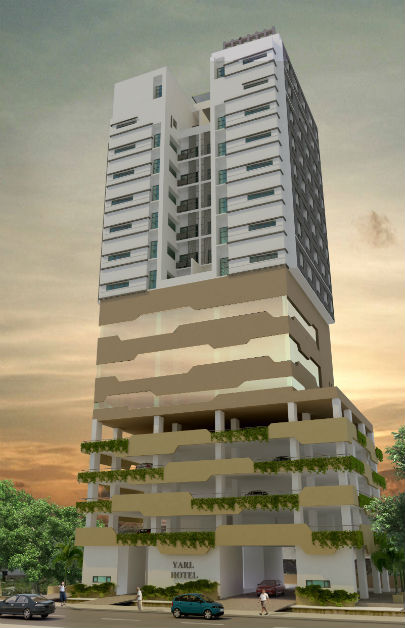
The Rs 700 million project is a joint venture between Mercantile Merchant Bank Ltd, and the Jetwing Group. Jetwing Yarl hotel is to be constructed on a 46 perch land area on the Old Clock Tower Road, in Jaffna. The star class hotel will have 76 rooms, 14 storied, roof top swimming pool, Presidential Suite. According to the project estimation the construction work is to be completed within 18 months.
This hotel will create employment for youth in the area in addition to boosting income and business opportunities to the self-employed, micro enterprises and farmers.
Douglas Devananda, Minister of Traditional Industries and Small Enterprise Development, Major General G. A. Chandrasiri, Governor of the Northern Province, Mr. Milinda Moragoda, Mr. Ruwan Samarasinghe, Managing Director, Jetwing Hotels and Ms. Shiromal Cooray, Managing Director of Jetwing Travels (Pvt) Limited also participated on this occasion. Pix by Chaminda Hittatiya
Source:http://www.news.lk/news/sri-lanka/1412-foundation-laid-for-rs-700-m-hotel-project-in-jaffna
The Rs 700 million project is a joint venture between Mercantile Merchant Bank Ltd, and the Jetwing Group. Jetwing Yarl hotel is to be constructed on a 46 perch land area on the Old Clock Tower Road, in Jaffna. The star class hotel will have 76 rooms, 14 storied, roof top swimming pool, Presidential Suite. According to the project estimation the construction work is to be completed within 18 months.
This hotel will create employment for youth in the area in addition to boosting income and business opportunities to the self-employed, micro enterprises and farmers.
Douglas Devananda, Minister of Traditional Industries and Small Enterprise Development, Major General G. A. Chandrasiri, Governor of the Northern Province, Mr. Milinda Moragoda, Mr. Ruwan Samarasinghe, Managing Director, Jetwing Hotels and Ms. Shiromal Cooray, Managing Director of Jetwing Travels (Pvt) Limited also participated on this occasion. Pix by Chaminda Hittatiya
Source:http://www.news.lk/news/sri-lanka/1412-foundation-laid-for-rs-700-m-hotel-project-in-jaffna
Saturday, February 4, 2012
Colombo-Jaffna expressway construction to be launched
The launching of construction work on the Colombo-Jaffna Expressway is to commence parallel to the Deyata Kirula exhibition, government information department announced.
It is to be constructed along Puttalam, Nikawewa, Oyamaduwa, Mannar and Silawathura areas.
Source:http://sundaytimes.lk/index.php?option=com_content&view=article&id=15479:-colombo-jaffna-expressway-construction-to-be-launched-&catid=1:latest-news&Itemid=547
Colombo-Jaffna expressway in the offing
PUSHING INFRASTRUCTURE: Sri Lankan President Mahinda Rajapaksa seen with his wife Shiranthi in Galle, after completing a journey on the country's first expressway on Sunday. The toll highway linking capital Colombo with the southern city cost $700 million, with much of the money obtained from Japan and the Asian Development Bank. Photo: AFP
Soon after opening Sri Lanka's first expressway connecting the capital, Colombo, with the southern port city of Galle on Sunday, President Mahinda Rajapaksa began the spadework for the next major infrastructure project: An expressway linking Colombo with Tamil-dominated Jaffna.
“I will work on the Jaffna expressway so that the distance can be covered in three hours,” said Mr. Rajapaksa. Jaffna is about 400 km from Colombo. The A-9 highway to Jaffna, which had not been re-topped in a few decades, is being repaired in stages. A one-way journey takes upwards of 10 hours by bus now.
“The President is determined about it [the Colombo-Jaffna expressway],” said Director-General of Presidential Media Bandula Jayasekara. “He said the country needs more connectivity to bring people together,” he said.
Eyeing foreign investments
Mr. Rajapaksa is pushing to get Sri Lanka infrastructure-ready so that foreign investments are not held back by shoddy transport and lack of facilities. Work is already on to build a second passenger terminal at the gateway to Sri Lanka, the Bandaranaike International Airport; a second international airport is coming up at Hambantota; and other smaller airports are being developed.
India, for instance, has helped rebuild the runway at the Palaly airport in Jaffna. The country's main airline, Sri Lankan, has begun operating air taxis to Kandy, Nuwara Eliya, Bentota, Trincomallee and Arugam Bay.
Recently revived
Besides, work on the Colombo port's second terminal is apace and India is working on the Kankesanthurai harbour, which is closest to the Tamil Nadu coast. Roads across the country are being re-laid and air-connectivity between Colombo and some world capitals have recently been revived.
In November the number of tourist arrivals crossed the 7.5-lakh target set for the year.
Source:http://www.thehindu.com/news/international/article2667341.ece
Thursday, February 2, 2012
Jaffna gets a 15 storied Star Class hotel
The rapidly developing Northern Province following the defeat of terrorism has become a springboard for local and foreign investors seeking investment opportunities in Sri Lanka. Construction of a 70-room, 15 storied star class hotel in the heart of Jaffna will be launched tomorrow. Mercantile Merchant Bank Ltd, and the Jetwing Group through an equally-owned joint venture will invest Rs. 700 million on this hotel project.
Launching of the construction will be jointly officiated by Prime Minister D.M Jayaratne and the Minister of Economic Development Mr. Basil Rajapaksa.
The hotel named Yarl Jetwing will be constructed on a 50 perch land area on the Old Clock Tower Road, in Jaffna. Designed by Design Group 5, the hotel will have a roof top swimming pool and a Presidential Suite and the construction work is to be completed within 18 months.
The location of the hotel will be adjacent to Rs. 500 million new shopping and entertainment complex being built by Cargills (Ceylon) Plc.
The new Cargills shopping complex of 4 floors with a total floor area of 74,000 sq ft would comprise of retail/shopping space, a bank, a food court, a Cineplex with three cinema screens and a basement car park. The construction work of this complex is to be completed by mid-2013.
Meanwhile, the MMBL is also implementing several other eco tourism projects in Delft Island in partnership with several other companies.(niz)
Launching of the construction will be jointly officiated by Prime Minister D.M Jayaratne and the Minister of Economic Development Mr. Basil Rajapaksa.
The hotel named Yarl Jetwing will be constructed on a 50 perch land area on the Old Clock Tower Road, in Jaffna. Designed by Design Group 5, the hotel will have a roof top swimming pool and a Presidential Suite and the construction work is to be completed within 18 months.
The location of the hotel will be adjacent to Rs. 500 million new shopping and entertainment complex being built by Cargills (Ceylon) Plc.
The new Cargills shopping complex of 4 floors with a total floor area of 74,000 sq ft would comprise of retail/shopping space, a bank, a food court, a Cineplex with three cinema screens and a basement car park. The construction work of this complex is to be completed by mid-2013.
Meanwhile, the MMBL is also implementing several other eco tourism projects in Delft Island in partnership with several other companies.(niz)
Tuesday, January 24, 2012
ExpoAir resumes flights to Jaffna:
ExpoAir, the pioneering domestic aviation company in Sri Lanka in operation since 1997 announced the resumption of regular flights from Colombo - Jaffna Offering a unique service, based on value for money, with stringent service standards, ExpoAir stands out as the only domestic airline which continued operations from Colombo to Jaffna during the armed conflict of the past decades.
Revamped with a brand new aircraft and new flight plan, ExpoAir aims to woo the business traveller with the promise of “Jaffna in just over 1 Hour”, with twice-daily scheduled flights; underscoring its understanding of the need for affordable and fast travel between the northern capital and Colombo. A brand new Cessna Grand Caravan 12 seater aircraft with leather seats, individual reading lights, air-vents, equipped with a drop-down monitor which will be screening silent movies during the flight.
The journey promises to be invigorating and comfortable with the added bonus of 2 flight crew members to take care of safety and comfort.
Taking off on February 01 ExpoAir will fly twice daily from Ratmalana Airport at 07:00 hrs. and 16:15 hrs. and return flights from Jaffna will be at 08:45 hrs. and 16:45 hrs. respectively, with arrival times approximately one hour after takeoff. The one-way tickets are priced at Rs. 10,000/- and return tickets at Rs 19,100/- which includes a 15 kg baggage allowance per individual. The excess baggage charges are limited to a nominal Rs. 150/- per kilo. ExpoAir will operate a special shuttle service to and from the Palaly airport to the Jaffna town to ensure maximum safety and comfort for the passengers.
Since 1997, ExpoAir has successfully established a strong standing among domestic air passengers based on its commitment and dedication to providing a service of the highest quality while adhering to the most rigid safety standards. ExpoAir commenced scheduled daily passenger flights to Jaffna after the signing of the peace pact, with the first flight to Jaffna taking off on June 03, 2002. Even during the peak of the armed conflict, with uninterrupted services throughout, ExpoAir was the business and leisure traveller’s first choice for travel to the country’s north.
The airline constantly kept upgrading its aircraft and operated 3-4 flights daily with two 52-seater aircraft namely the Fokker F-27-500. ExpoAir temporarily suspended its domestic operation in 2010 due to the fact that the general public opted to drive to Jaffna sans any security threat and the non-presence of the rebels. Curiosity drove the public to drive and see for themselves areas held by the rebels for almost three decades where free movement was not possible due to the presence of the rebels.
Source:http://www.dailynews.lk/2012/01/25/bus01.asp
Revamped with a brand new aircraft and new flight plan, ExpoAir aims to woo the business traveller with the promise of “Jaffna in just over 1 Hour”, with twice-daily scheduled flights; underscoring its understanding of the need for affordable and fast travel between the northern capital and Colombo. A brand new Cessna Grand Caravan 12 seater aircraft with leather seats, individual reading lights, air-vents, equipped with a drop-down monitor which will be screening silent movies during the flight.
The journey promises to be invigorating and comfortable with the added bonus of 2 flight crew members to take care of safety and comfort.
Taking off on February 01 ExpoAir will fly twice daily from Ratmalana Airport at 07:00 hrs. and 16:15 hrs. and return flights from Jaffna will be at 08:45 hrs. and 16:45 hrs. respectively, with arrival times approximately one hour after takeoff. The one-way tickets are priced at Rs. 10,000/- and return tickets at Rs 19,100/- which includes a 15 kg baggage allowance per individual. The excess baggage charges are limited to a nominal Rs. 150/- per kilo. ExpoAir will operate a special shuttle service to and from the Palaly airport to the Jaffna town to ensure maximum safety and comfort for the passengers.
Since 1997, ExpoAir has successfully established a strong standing among domestic air passengers based on its commitment and dedication to providing a service of the highest quality while adhering to the most rigid safety standards. ExpoAir commenced scheduled daily passenger flights to Jaffna after the signing of the peace pact, with the first flight to Jaffna taking off on June 03, 2002. Even during the peak of the armed conflict, with uninterrupted services throughout, ExpoAir was the business and leisure traveller’s first choice for travel to the country’s north.
The airline constantly kept upgrading its aircraft and operated 3-4 flights daily with two 52-seater aircraft namely the Fokker F-27-500. ExpoAir temporarily suspended its domestic operation in 2010 due to the fact that the general public opted to drive to Jaffna sans any security threat and the non-presence of the rebels. Curiosity drove the public to drive and see for themselves areas held by the rebels for almost three decades where free movement was not possible due to the presence of the rebels.
Source:http://www.dailynews.lk/2012/01/25/bus01.asp
Wednesday, January 18, 2012
India to construct a cultural center in Sri Lanka's Tamil heartland of Jaffna
As part of its development partnership with Sri Lanka and in response to the request by the Government of Sri Lanka, the Government of India is undertaking a project to construct a Cultural Centre at Jaffna at an estimated cost of Rs. 900 million.
In a ceremony held Tuesday, India's Minister for External Affairs S. M. Krishna and Sri Lankan Minister of Economic Development Basil Rajapaksa presented awards to the top three designs submitted by architects whose entries were selected by a jury after the completion of the National Design Competition for the Jaffna Cultural Centre.
The awards involve a prize amount of US$ 3,500 for the 1st prize, US$ 3,000 for the 2nd prize and US$ 2,500 for the third.
The Jury has unanimously selected the design submitted by Architect Madura Premathileka as the first place design, the design submitted by Cynthia & Athula Ranasinghe Chartered Architects as the second and the design submitted by Design Consortium (Pvt) Ltd. as the third.
The first place winner presented his design before the Indian and Sri Lankan ministers at the ceremony on Tuesday.
India has undertaken the project to preserve and foster the rich cultural heritage of the Jaffna District and other nearby areas, which are replete with historical, archeological and religious resources.
"It is decided to develop the Jaffna Cultural Centre as an iconic building that would serve as a cynosure of cultural activities in Northern Sri Lanka," the Indian High commission said in a statement.
The Centre is also intended to create opportunities for cooperation amongst all Sri Lankan communities, including Tamils, Muslims and Sinhalese.
The primary purpose of the Jaffna Cultural Centre would be to provide a cultural and social space for the people of Jaffna to enjoy various local and international cultural products, apart from serving as a delivery centre for training, instructions and education in a variety of cultural disciplines. For these purposes, the Centre would comprise a theatre-style auditorium (with projection facilities) with a capacity of about 600 people, a multimedia library with on-line research facilities, exhibition and gallery space and a museum. It would also have an instructional wing, which would have facilities for the conduct of classes in vocal and instrumental music, dance and languages, including a language lab. It would also be able to serve as a hub for civil society activities, for which purpose it would include a conference hall-cum-seminar room.
Both governments have jointly decided to conduct a National Design Competition in order to select the best design for the Cultural Centre that would take these requirements into account.
The Sri Lanka Institute of Architects (SLIA) was entrusted with the task of conducting the National Design Competition in two separate rounds.
A seven-member jury, co-chaired by High Commissioner of India Ashok K. Kantha, and President of SLIA Ranjan Nadesapalli, one architect each from SLIA and India, one representative each from the governments of India and Sri Lanka, and the Mayor of Jaffna evaluated the entries received during the National Design Competition. The entries were evaluated by the jury without the knowledge of the architects, through a process of assigning code numbers to each entry.
During the first round of the design competition, the jury shortlisted eight designs for the second round of competition out of 29 designs it received. The evaluation of these eight entries was based on a number of carefully identified criteria such as the technical acceptability, context plan, aesthetic / architectural language, space efficiency, buildabillity and environmentally friendly, sustainable architecture.
At the end of the process, the Jury unanimously selected the best three designs.
This Project is one of the many initiatives taken by the Indian government to assist the people of Sri Lanka.
It will be implemented under grant assistance from the Government of India with the cooperation of the Ministry for Economic Development and the local Government.
Subscribe to:
Posts (Atom)